Behind its thin layer of caramelized sugar, crème brûlée is one of the most iconic desserts of French cuisine. Its exact origin remains debated: some sources trace it back to 17th-century French kitchens, while others claim a connection to the Spanish "crema catalana" or the English "burnt cream." The first known French recipe, however, appears in a work by the cook François Massialot, published in 1691.
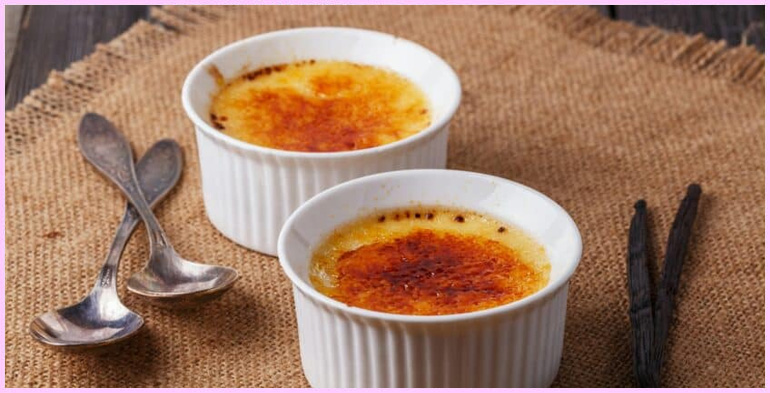
You can certainly eat crème brûlée on its own, but traditionally, it's prized for the contrast between the smooth, cold cream and the crisp, caramelized surface. To create the caramelized layer of crème brûlée, a thin layer of sugar is sprinkled over the very cold cream, then the top is quickly heated until the sugar melts and turns amber. The most common method involves using a kitchen torch held a few centimeters from the surface so that the sugar melts, bubbles, and then caramelizes.
Made with cream, egg yolks, sugar, and vanilla, and long served in fine dining establishments and restaurants, crème brûlée has become a classic homemade dessert.
20 cl of liquid cream, 2 egg yolks, 21 g of sugar and 14 g of vanilla sugar.
After warming the liquid cream, mix sugar, egg yolk and cream well in a bowl before pouring the mixture into 3 appropriately sized ramekins.
