| Chakchoura (Look) Dish |
Crème Brûlée (Look) Dessert |
Egg custard (Look) Dessert |
| Egg Cocote Salmon (Look) Dish |
An air fryer is a small convection oven that can fry food without immersing it in oil. A fan propels hot air at high speed, producing a crispy coating through browning reactions such as the Maillard reaction.
Although the SEB group marketed the first hot air fryer, named Actifry, in 2006, it was the model marketed in 2010 under the name Airfryer by the Dutch group Philips that would achieve widespread success.
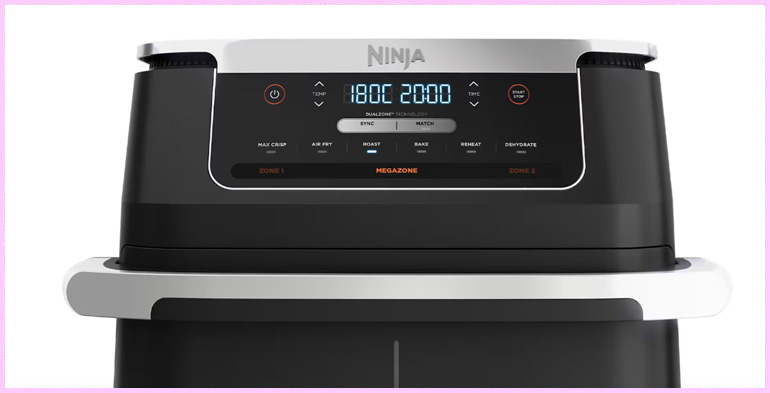
Personally, I opted for a Ninja Foodi FLEX 6.6L (it also comes in a 10L version if you usually cook for four or more). The big advantage of the Flex is being able to switch from two independent cooking zones to a single MegaZone (useful for a whole chicken or certain cakes, for example). I have no affiliation with the company, but be careful because I see that quite a few people are having cooking problems, and frankly, given how easy it is to use, I suspect that the lower-end models don't provide optimal results (that said, this is just my intuition; I haven't done any concrete tests to confirm this hypothesis).
Nutrition: Much less fat! You can reduce the amount of fat ingested by 70 to 90% compared to traditional frying, which is better for your heart and weight. There's also less formation of certain toxic substances than with traditional frying (like acrylamide), and it avoids reusing burnt oil. That said, the appliance doesn't work miracles; a commercially produced cordon bleu is still a commercially produced cordon bleu, but it does allow you to easily make authentic cordon bleu!
Simplicity: You set it up, adjust it, wait; the effort required is practically nonexistent. And cooking is frankly faster than with a conventional oven.
For me, it's one of the rare "brilliant new products" churned out annually by marketing that's actually brilliant. I have no opinion on the "nutritional" aspect, but in terms of portion size, simplicity, and taste, it's absolutely amazing! (As for the dietary aspect, my opinion is that what's really bad for your health is excess and inconsistency. I don't believe in the danger of eating greasy fries cooked in -clean- oil any more than I believe in the danger of drinking a glass of whiskey! However, if you eat fries every day or if you go three days on a bottle of scotch, your chances of having problems increase significantly, BUT the product isn't responsible, you are!)
Depending on the device, you will have several programs available; here are the ones for mine (Understand that these "programs" are simply presets on the fan speed and temperature, the latter remaining adjustable for each program).
